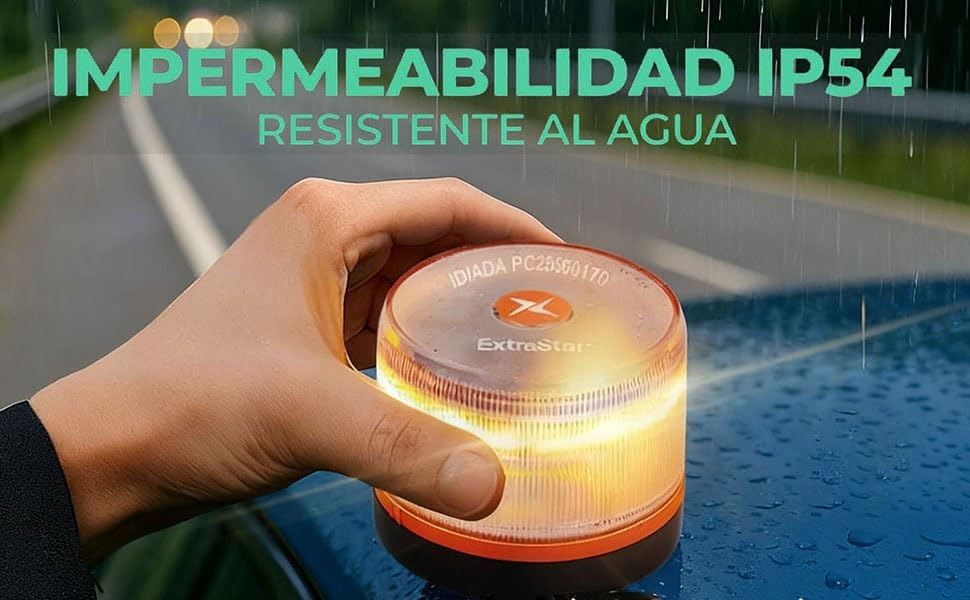
The V-16 beacon is revolutionising road safety in Spain. Starting January 1, 2026, this innovative orange flashing device will become mandatory for all drivers, replacing the traditional emergency warning triangles that have been a staple in Spanish vehicles for decades. This comprehensive guide explains everything you need to know about the new V-16 beacon law, how it works, where to buy certified devices, and why this change could save lives on Spanish roads.
The V-16 beacon, officially known as the “V-16 Hazard Warning Device,” is a smart, connected emergency light that drivers must carry in their vehicles. Unlike traditional warning triangles that require you to walk along dangerous roadways to place them, the V-16 beacon is placed directly on top of your immobilised vehicle.
This amber-colored device does two critical things simultaneously:
The V-16 beacon represents Spain’s commitment to the Safe System approach outlined in the DGT’s Road Safety Strategy 2030, which aims to reduce fatal and serious accidents by 50% in alignment with United Nations and European Commission goals.
Why is Spain Making the V-16 Beacon Mandatory?
The Deadly Risk of Emergency Triangles
The current system of emergency triangles poses significant dangers to drivers. When a vehicle
breaks down or is involved in an accident on Spanish roads, drivers must:
This practice has proven deadly. According to DGT statistics:
Additional Problems with Traditional Triangles
Beyond the safety risks, emergency triangles have several practical limitations:
Weather Vulnerability: Triangles cannot remain upright in adverse conditions like strong winds, heavy rain, or hail, rendering them useless precisely when visibility is most compromised.
Fog and Reduced Visibility: The required 100-meter visibility distance for triangles becomes impossible in fog or poor weather conditions.
Abandoned Equipment: Many drivers, recognising the danger, choose not to return to retrieve their triangles, leaving them abandoned on roadways.
Limited Accessibility: Drivers with reduced mobility cannot safely exit vehicles and walk along busy roads to place triangles.
How the V-16 Beacon Works
Physical Operation
The V-16 beacon is designed for simplicity and maximum safety:
DGT 3.0 Connected Vehicle Platform Integration
What sets the V-16 beacon apart from a simple flashing light is its connectivity:
Automatic GPS Transmission: Upon activation, the device immediately sends your exact location to the National Access Point (NAP), Spain’s traffic information hub mandated by EU Directive 2010/40/EU.
Real-Time Updates: The V-16 beacon transmits location data every 100 seconds while active, ensuring continuous monitoring.
Multi-Platform Alert System: Your breakdown location is shared across:
Data Verification: The DGT 3.0 platform cross-references V-16 beacon signals with other traffic management systems, roadside equipment, and police reports to confirm incidents before alerting drivers.
Deactivation: When you remove or deactivate the beacon, a final signal is sent confirming the incident has been resolved.
Technical Specifications of Certified V-16 Beacons
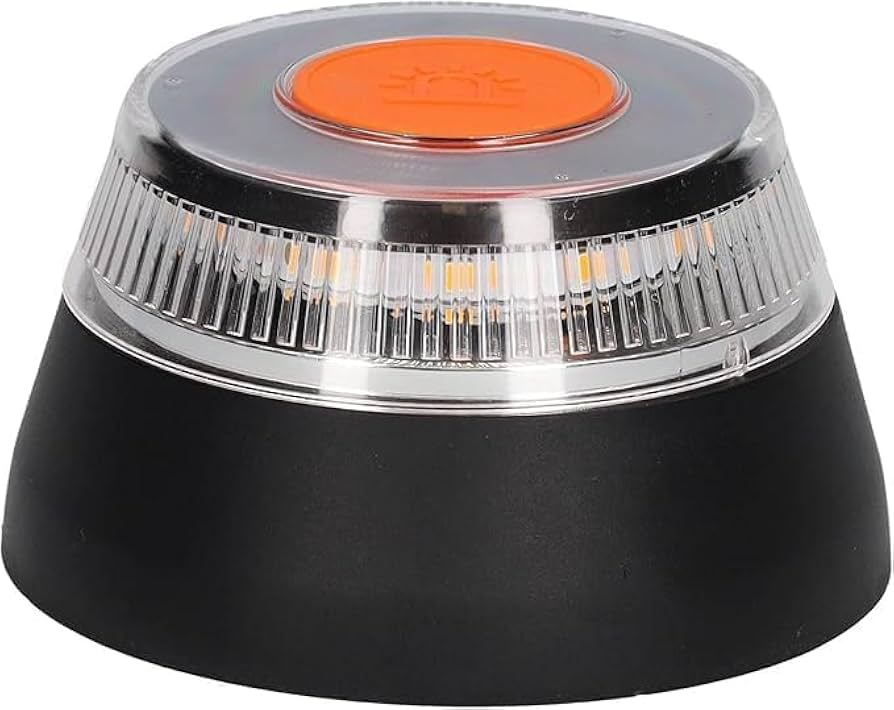
To be certified and legal for use in Spain, V-16 beacons must meet strict technical requirements established by Royal Decree 2822/1998 and Royal Decree 159/2021:
Lighting Characteristics
Physical Specifications
Connectivity Requirements
Certification Process
All V-16 beacons must be certified by laboratories accredited to UNE EN-ISO 17025 standards for UNECE Regulation 65. The certification verifies:
Approved V-16 Beacon Manufacturers and Models
As of the document’s publication date, the DGT has certified several V-16 beacon models. The official list is published at www.dgt.es/v16 and includes:
Currently Certified Models
Important Note: Only devices appearing on the official DGT list at www.dgt.es/v16 are legal for compliance with the January 2026 mandate. Always verify certification before purchasing.
What to Look for When Buying
✅ DGT Certification: Confirm the specific model appears on the official list
✅ Service Expiry Date: Must be displayed on both packaging and device
✅ 12-Year Connectivity: Ensure communication costs are included
✅ No Additional Features: Legitimate V-16 beacons are dedicated safety devices only
✅ Certificate Number: Look for the LCOE certification number
Timeline and Transition Period
Current Status (Until December 31, 2025)
Emergency warning triangles remain legal and can continue to be used. Additionally, V-16 warning lights manufactured before Royal Decree 159/2021 that meet most technical specifications (except connectivity requirements) can be used during this transition period.
January 1, 2026 – Mandatory Compliance Date
From this date forward:
Who Must Comply
The V-16 beacon requirement applies to:
Tourists and Short-Term Visitors: While regulations for temporary visitors are still being clarified, carrying a V-16 beacon is strongly recommended for anyone driving in Spain after January 1, 2026.
Where to Purchase V-16 Beacons
Certified V-16 beacons are available through multiple channels:
Retail Options
Pricing
Expect to pay between €20-€40 for a certified V-16 beacon, with pricing variation based on:
Remember: The purchase price includes 12 years of connectivity with no additional fees.
Buying Tips
🔍 Verify Before Purchase: Check www.dgt.es/v16 to confirm the exact model is certified
📱 Keep Documentation: Retain proof of purchase and certification information
🔋 Check Expiry Dates: Ensure the device has sufficient service life remaining
⚠️ Beware of Counterfeits: Only purchase from reputable sellers
How to Use Your V-16 Beacon in an Emergency
Step-by-Step Activation
When to Use the V-16 Beacon
Activate your V-16 beacon whenever your vehicle is:
Deactivation
Once your vehicle has been moved to safety or the emergency has been resolved:
Legal Requirements and Penalties
Mandatory Equipment
As of January 1, 2026, every vehicle must carry:
Potential Penalties
While specific fines for V-16 beacon non-compliance are still being finalized, expect penalties similar to other mandatory equipment violations:
Insurance Considerations
Check with your insurance provider regarding:
Benefits of the V-16 Beacon System
Safety Improvements
Reduced Pedestrian Deaths: Eliminates the need for drivers to walk on dangerous roadways, directly addressing the leading cause of roadway pedestrian fatalities.
Increased Visibility Range: 1,000 meters vs. 100 meters provides far more warning time for approaching drivers.
All-Weather Reliability: Unlike triangles, V-16 beacons function effectively in wind, rain, and adverse conditions.
Universal Accessibility: Drivers with mobility challenges can use the system without exiting vehicles.
Technological Advantages
Real-Time Traffic Management: Emergency services and traffic control centres receive immediate notification of incidents.
Connected Navigation: Drivers approaching breakdown locations receive warnings through their navigation systems.
Data-Driven Safety: The DGT 3.0 platform collects data to identify accident-prone areas and improve infrastructure.
Future Integration: The system creates groundwork for vehicle-to-vehicle (V2V) and vehicle-to-infrastructure (V2I) communication.
Practical Benefits
Convenience: One device placed from inside the vehicle vs. walking 100-200 meters with triangles.
Time Savings: Immediate activation and deactivation without equipment retrieval.
Space Efficiency: Compact device vs. bulky triangle storage.
No Equipment Loss: Drivers won’t abandon beacons as they did with triangles.
Frequently Asked Questions
Q: Can I still use my emergency triangles after January 1, 2026?
A: No, triangles will no longer satisfy legal requirements as the primary warning device. Only certified V-16 beacons with connectivity will be compliant.
Q: Do I need to pay for the connectivity service?
A: No, the purchase price includes 12 years of connectivity with no subscription fees.
Q: What happens if my V-16 beacon battery dies?
A: Devices must maintain battery life for 18 months. Check your device periodically and replace or recharge as needed. Most devices indicate low battery status.
Q: Will my V-16 beacon work outside Spain?
A: The device will provide visual warning anywhere, but connectivity features only work within the Spanish DGT 3.0 system. Other EU countries may adopt similar systems in the future.
Q: Can I have multiple V-16 beacons?
A: Yes, having backup devices is allowed, though only one is required per vehicle.
Q: What if I’m a tourist driving in Spain?
A: Regulations for temporary visitors are being finalised. It’s strongly recommended to carry a V-16 beacon or ensure your rental vehicle includes one.
Conclusion: Embracing Spain’s Road Safety Future
The V-16 beacon mandatory law represents a significant step forward in Spanish road safety. By eliminating the deadly practice of placing emergency triangles and introducing connected vehicle technology, Spain is pioneering an innovative approach that could serve as a model for other European nations.
As January 1, 2026, approaches, all drivers should:
✅ Purchase a certified V-16 beacon from the official DGT list
✅ Familiarise yourself with proper activation procedures
✅ Store the device accessibly in your vehicle
✅ Verify your device’s service expiry date
✅ Stay informed about any regulation updates
The small investment in a V-16 beacon, typically €20-€40, could save your life or the lives of other road users. Don’t wait until the last minute. Make compliance a priority today and contribute to safer Spanish roadways for everyone.
For the most current information, official device listings, and regulatory updates, visit the DGT’s official V-16 page at www.dgt.es/v16.
Stay safe, stay compliant, and welcome to the future of connected road safety in Spain.
A V16 is a connected flashing beacon that signals breakdowns and sends your GPS location to Spain’s DGT 3.0 traffic system automatically.
Yes, from January 1, 2026, all vehicles in Spain must carry a DGT-certified V-16 beacon. Emergency triangles will no longer be legally acceptable.
The V-16 beacon is Spain’s new mandatory emergency device, an amber flashing light placed on your roof that transmits your location to warn other drivers.
Only V-16 beacons listed on www.dgt.es/v16 are DGT-approved. Verify your device appears on this official certification list before purchasing.
V-16 beacons have a 1,000-meter visual range. GPS signals reach DGT’s network instantly, alerting drivers via navigation apps and traffic management systems.
Best V-16 brands include Help Flash IoT, FlashLED SOS, and PF LED ONE V16. Choose DGT-certified models from www.dgt.es/v16 based on your budget.
The orange flashing light is the V-16 beacon, Spain’s mandatory emergency warning device replacing triangles. It alerts traffic to immobilised vehicles from January 2026.
No, green flashing lights are restricted to specific authorised vehicles in Spain. Private vehicles may only use amber V-16 beacons and standard hazard lights.
Yes, radar detectors are illegal in Spain. Possession or use results in €6,000 fines, 6 points lost, and device confiscation. GPS apps showing cameras are legal.
Spain fines foreign drivers via rental companies, cross-border enforcement agreements (EU), or requires payment before vehicle release. Unpaid fines follow you home in EU countries.
Spain allows proportional self-defence. Pepper spray under 5% concentration is legal without permits. Tasers, knives as weapons, and firearms require licenses or are prohibited.
The V-16 beacon mandatory law represents a significant step forward in Spanish road safety. By eliminating the deadly practice of placing emergency triangles and introducing connected vehicle technology, Spain is pioneering an innovative approach that could serve as a model for other European nations.
As January 1, 2026, approaches, all drivers should:
✅ Purchase a certified V-16 beacon from the official DGT list
✅ Familiarise yourself with proper activation procedures
✅ Store the device accessibly in your vehicle
✅ Verify your device’s service expiry date
✅ Stay informed about any regulation updates
The small investment in a V-16 beacon, typically €20-€40, could save your life or the lives of other road users. Don’t wait until the last minute. Make compliance a priority today and contribute to safer Spanish roadways for everyone.
For the most current information, official device listings, and regulatory updates, visit the DGT’s official V-16 page at www.dgt.es/v16.
Stay safe, stay compliant, and welcome to the future of connected road safety in Spain.
